
Introduction
The biggest misconception about the rabies vaccine is that it provides lifelong protection. In reality, its effectiveness fades over time. Certain groups, such as avid travellers, zookeepers, and veterans, should be aware of:
How long does the rabies vaccine last?
This guide provides a detailed explanation of the rabies vaccine, booster dose schedule, cost, and answers to frequently asked questions.
Let’s begin.
What Is Rabies and How Does It Affect the Nervous System?
Rabies is a severe viral disease caused by RABV (rabies virus). It is primarily transmitted through an infected animal’s bite or scratch.
Rabies is a severe viral disease caused by RABV (rabies virus). It is primarily transmitted through an infected animal’s bite or scratch.
Dogs, bats, cats, foxes, and raccoons most commonly transmit this virus through their saliva.
Rabies is dangerous because, unlike other infections, it does not directly enter the bloodstream. Instead, it travels along the nerves.
Initially, it affects the neuromuscular junction, the connection point of nerve and muscle. After that, it progresses along the nerve fibres. Then, it affects the spinal cord and finally reaches the brain.
Once it affects the brain, it is almost fatal. At this stage, there are no effective treatments.
In the UK, rabies is rare and found only in bats. However, it is very common in regions such as Asia, Africa, Latin America, and some parts of Eastern Europe.
Travellers planning to visit these areas should be vaccinated before travelling.
Book Your Appointment

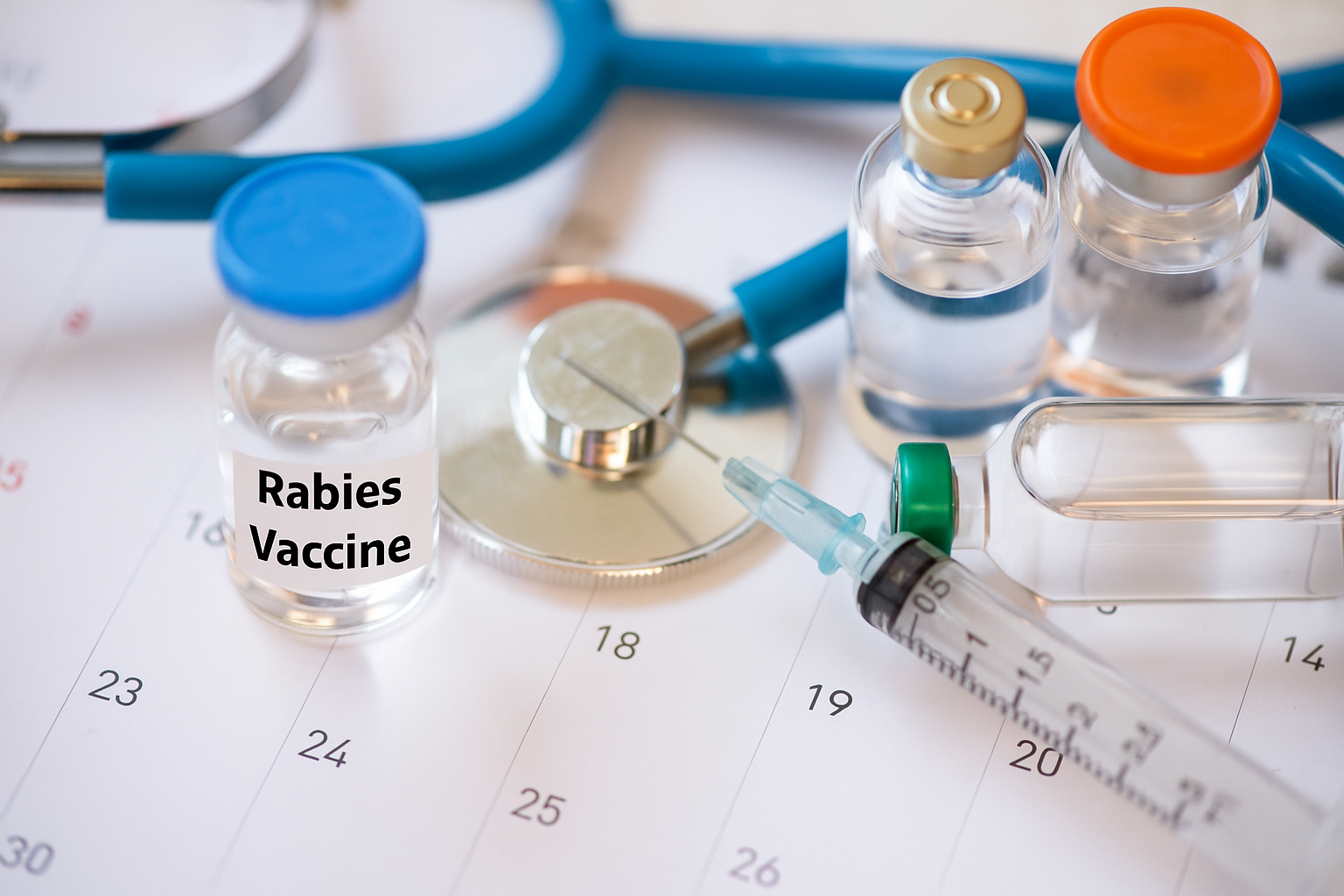
How Does the Rabies Vaccine Work?
There are two main types of vaccination processes:
-
Pre-exposure vaccination
-
Post-exposure vaccination
Both vaccine types work similarly, stimulating a strong antibody response against the virus. A chemical agent named beta-propiolactone (BPL) effectively inactivates the virus and prevents its replication.
However, the vaccination schedule may vary from 2 to 4 shots, depending on the individual’s factors and previous vaccine history.
Here are the two possible scenarios: How long does the rabies vaccine last?
Scenario 1: The person who has received the pre-exposure vaccine
If a vaccinated person is bitten, scratched, or potentially exposed to rabies, they do not need the full vaccination dose again. Instead, they need two booster doses without rabies immunoglobulin (RIG).
Scenario 2: Person with no previous vaccination history:
If an unvaccinated person is exposed to rabies, they must complete four doses of post-exposure vaccine.
Toddlers and adults receive the rabies vaccine in their deltoid muscle (shoulder). Babies receive in their thigh (vastus lateral muscles).
Types of Rabies Vaccination
Rabies vaccine is categorised into 2 main types.
-
pre-exposure
-
Post-exposure
In this section, we will learn more important factors about these two types.
Pre-exposure is recommended for avid travellers, people who work with animals, such as pet owners or zookeepers, researchers, and others.
Schedule of doses: Three total doses: Day 0, 7, 21 or 28.
Post-Exposure: Give it immediately within the incubation period after a bite or scratch from an infected animal.
Schedule of doses: For unvaccinated people, four doses- Day 0, 3, 7, 14. For previously vaccinated: two doses on Day 0, 3.
How Long Does the Rabies Vaccine Last?
The effectiveness of a rabies vaccine depends on the level of risk exposure and when you get it. Usually, the pre-exposure vaccination gives solid protection for 2 to 3 years.
The rabies vaccine may give protection up to 5 years. You should receive a booster dose every 3 years if you are in the following groups:
-
Avid traveller- often visits areas where rabies is common
-
Veterans
-
Zookeepers
-
Pet owners
-
Laboratory worker (who works/on researching the rabies virus)
The effectiveness of the rabies vaccine also depends on a person’s health status and immune system.
How Long Does the Rabies Vaccine Last?
A rabies vaccine can provide long-term protection against RABV. However, it does not ensure lifetime protection. After successful vaccination, a healthy person can develop strong, long-lasting immunity against the virus.
But this immunity will disappear over time.
A frequent traveller or someone working with animals should receive booster shots every three years.
How Often Do Adults Need Rabies Boosters?
For most people, a booster dose is suggested every three to five years to keep the immune system strong.
However, frequent travellers and animal workers need extra precautions. They must take a booster dose every two to three years. Notably, laboratory workers who work with rabies must check their immune system regularly.
Can Rabies Vaccines Work After 10 or 20 Years?
Let’s clear a common misconception related to rabies vaccination. The rabies vaccine can give long-term immunity, lasting up to 10 years, according to the WHO, but not lifelong.
If you are at risk of exposure, you will need a booster dose every two to three years, especially when travelling to areas where rabies is common.
Think of it like an upgrade to your body’s defence system.
Do You Need to Get the Vaccine Again After a Bite?
The death of a British traveller in Morocco reminds us how fatal rabies is once the symptoms appear.
So if you have been scratched—whether by a cat, a stray, or any wild animal—seek immediate medical evaluation. If you were previously vaccinated, you might wonder about further vaccination.
Yes, but in this case, you only need vaccine doses without rabies immunoglobulin (RIG).
Can I Take the Rabies Vaccine Without Being Bitten?
Yes, this is called a pre-exposure vaccine. This proactive approach is for frequent travellers, vets, and people working in remote areas where medical access is challenging.
You will gain additional protection even if you encounter a potential rabies risk; your post-exposure treatment will be easier and less stressful.
What Are the Effects of the Rabies Vaccine?
Right after the dose, you may experience mild effects, such as fatigue, swelling at the injection site, and a slight headache.
However, these effects disappear within 24 to 72 hours. A severe reaction is extremely rare. If you notice any abnormality, immediately inform your provider or any healthcare expert.
Can You Still Get Rabies After Being Vaccinated?
After the rabies vaccination, your body develops a strong immunity to the rabies virus. Therefore, there is a minimal chance of getting rabies if you are vaccinated and follow all medical guidelines.
Seek medical attention if bitten or scratched.
Why Can’t Rabies Be Cured?
Once the virus reaches the brain, it disrupts brain function. Prevention through vaccination is the only cure.
When Is It Too Late to Treat Rabies?
Once the symptoms appear, vaccinations or other treatments are no longer effective; immediate treatment within the incubation period is essential.
What Country Has the Most Rabies Cases?
According to the NHS, rabies is common in the following regions:
-
India
-
China
-
Sub-Saharan Africa
Rabies Vaccine Cost in the UK
At Travel Jabs 4 U, we provide transparent pricing. Each vaccine dose costs £50–£80.
This price includes consultation, certification, and custom guidance to ensure your full protection while travelling.
Rabies Prevention Tips for Travellers
Here are three actionable tips you must follow while travelling:
-
Talk to your travel health professional. If necessary, get a pre-exposure vaccination based on your destination.
-
Don’t wait for the last-minute rush. Complete your full dose before your flight.
-
While travelling abroad, avoid direct contact with stray cats, dogs, or wild animals. Supervise children to prevent exposure.
Final takeaways:
Today’s discussion clarified: How long does the rabies vaccine last?
Its effectiveness depends on factors such as the person’s health, chance of exposure, and previous vaccination history.
Once you are vaccinated, you may get long-term protection, but a regular booster dose is essential if you have the potential to explore.
Medical information on this vaccination page has been reviewed for accuracy and updated for 2026. Prices, guidance and availability are checked regularly in line with current UK travel health recommendations.
*Prices may vary from pharmacy to pharmacy.
About the Author